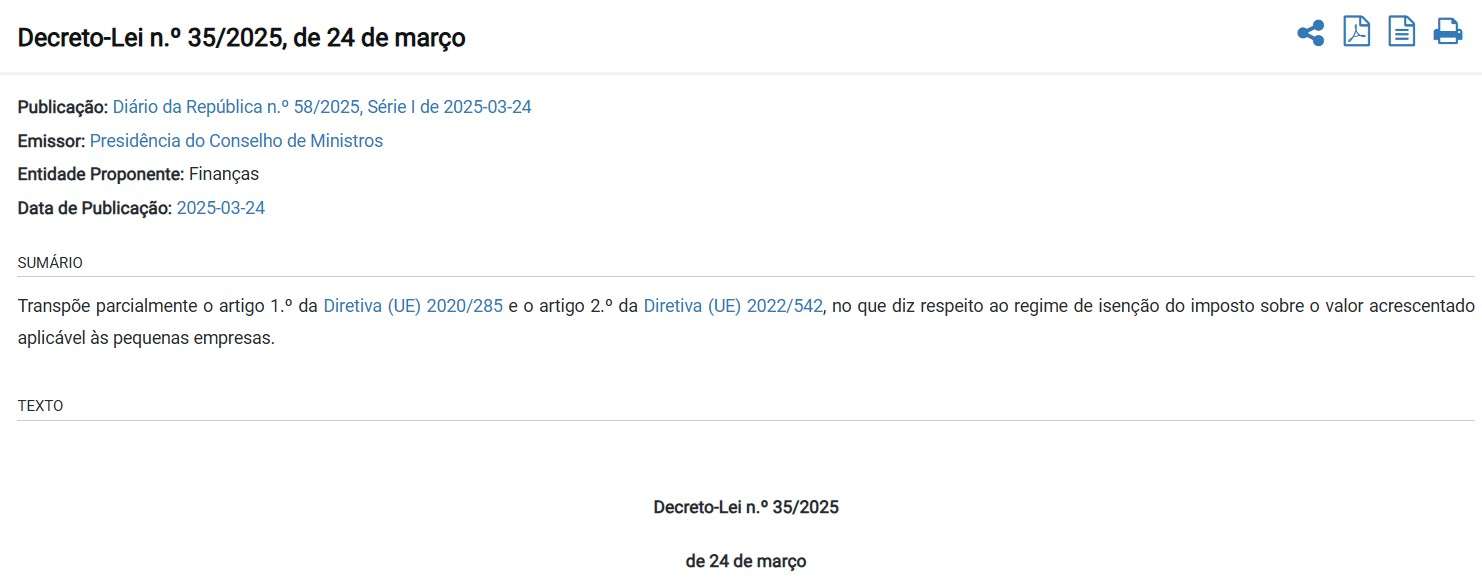
From July 1, 2025, new rules will come into effect regarding the VAT exemption regime (Article 53 of the CIVA, or VAT Code), according to Decree-Law No. 35/2025, dated March 24. These rules will affect companies and sole business traders alike, but are of particular importance, given the topic of this website, for non-resident Alojamento Local owners.
Below is a simple and direct summary of the changes:
❌ NON-RESIDENTS WHO OWN ALOJAMENTO LOCAL PROPERTIES IN PORTUGAL
If you reside outside of Portugal and own a property registered for tourist rentals (Alojamento Local) in Portugal:
- You will no longer be eligible for the VAT exemption regime, and must register for VAT;
- You will be required to charge VAT to all guests, for all bookings, at the special rate of 6%;
- You can deduct VAT on all costs related to the business activity (normally charged at 23%);
- You must appoint a fiscal representative in Portugal;
- You will be required to submit periodic VAT returns.
These changes are mandatory and will be in effect starting July 1, 2025.
✅ RESIDENTS IN PORTUGAL WHO ARE SELF-EMPLOYED OR HAVE A REGISTERED BUSINESS ACTIVITY
If you have a registered business activity and a fiscal address in Portugal, you may continue to benefit from the VAT exemption regime, provided that:
- Your annual turnover does not exceed €15,000;
- Or, you do not exceed €18,750 in turnover during the first half of 2025.
If your turnover exceeds €18,750 between January and June 2025, you will be automatically moved to the standard VAT regime starting July 1, 2025. Additionally, this VAT exemption regime may apply to other EU countries.
⏳ CHANGES TO DEADLINES FOR NOTIFICATION TO THE TAX AUTHORITY (AT)
- If you exceed €15,000 in 2025, you must notify the Tax Authority (AT) within 15 working days after December 31;
- VAT will then become due starting January 1, 2026.
- If you exceed €18,750 at any point during the year, VAT becomes due starting from the invoice that surpasses that threshold.
Additional Notes:
- Article 53 of the CIVA governs the simplified VAT exemption for small businesses and self-employed professionals in Portugal.
- This update aligns with EU directives on harmonizing VAT rules and enforcing compliance, especially for non-residents engaged in economic activity within EU member states.
- The new rules reflect greater scrutiny of cross-border services, especially in sectors like short-term rentals.
- Residents in a European Union country (except for Spain and Ireland) may register for a business activity in those countries and be exempt from VAT. This will then apply also in Portugal, up to the current limit of 15,000 euros revenue.